* Estimated delivery times start from the date of shipment, excluding processing time.
* Actual delivery times may vary due to holidays, weather conditions, or customs delays.
Kostenloser Standardversand bei Bestellungen über $9.9
Rückgaberecht
Rückgaben werden innerhalb von 40 Tagen nach Erhalt der Ware akzeptiert. Personalisierte Artikel können nicht zurückgegeben oder umgetauscht werden. Artikel, die mit einer E-Geschenkkarte gekauft wurden, können nur umgetauscht werden; Rückerstattungen sind nicht möglich.
Kostenloses Geschenk
Willkommen bei Roymall, deiner professionellen Website für den Kauf von Premium-Warenhausgeschenken. Wir schätzen und schätzen deine Unterstützung sehr und möchten unsere Dankbarkeit zeigen, indem wir deinen Einkäufen eine zusätzliche Portion Aufregung verleihen. Wenn du bei uns einkaufst, genießt du nicht nur hochwertige Produkte, die deinen Lebensstil verbessern, sondern erhältst auch ein exklusives kostenloses Geschenk zu jeder Bestellung. Bereit, unsere Kollektion zu erkunden und deine perfekten Geschenke zu finden? Durchstöbere unsere Auswahl an Premium-Warenhausartikeln, gib deine Bestellung auf und freue dich auf das kostenlose Geschenk, das zusammen mit deinem Einkauf ankommt.
Versandrichtlinie
Wir werden uns bemühen, die Artikel nach Erhalt deiner Bestellung sicher zu dir zu liefern. Die Lieferdetails werden in deiner Bestätigungs-E-Mail angegeben.In den meisten Fällen werden Bestellungen innerhalb von 2 Tagen bearbeitet. Unter besonderen Umständen kann es zu Verzögerungen kommen: Wenn du deine Bestellung am Samstag, Sonntag oder an Feiertagen aufgibst, wird sie um 2 Tage verzögert.Normalerweise dauert es 5-7 Werktage (Montag bis Freitag), ohne dass Flugverzögerungen oder andere Umweltfaktoren dies beeinflussen.Da unser Versandservice weltweit ist, hängen die Lieferzeiten von deinem Standort ab. In abgelegenen Gebieten oder Ländern kann es einige Tage dauern, also bitte habe Geduld.
1. Rückgabe- und Umtauschrichtlinie
Wir akzeptieren nur Artikel, die auf roymall.com gekauft wurden. Wenn du bei unseren lokalen Händlern oder anderen Einzelhändlern kaufst, kannst du sie nicht bei uns zurückgeben.Artikel im Schlussverkauf oder kostenlose Geschenke können nicht zurückgegeben werden.Um für eine Rückgabe berechtigt zu sein, muss dein Artikel unbenutzt und in dem Zustand sein, in dem du ihn erhalten hast. Er muss sich auch in der Originalverpackung befinden.Nachdem du die Rückgabeanweisungen von uns erhalten hast, verpacke bitte deine zurückgegebenen Artikel und gib dein Paket bei der örtlichen Post oder einem anderen Kurierdienst ab. Wir bearbeiten deine Rückgabe oder den Umtausch des Artikels innerhalb von 3-5 Werktagen nach Erhalt. Die Rückerstattung wird automatisch auf deine ursprüngliche Zahlungsmethode gutgeschrieben.Keine Rückgaben oder Umtausche sind möglich, wenn das Produkt individuell angefertigt wurde, einschließlich individueller Größe, Farbe oder Druck.Benötigst du weitere Hilfe? Kontaktiere uns. service@roymall.com oder Whatsapp: +447549870296
2. Rückerstattungsrichtlinie
Du erhältst eine vollständige Rückerstattung oder 100% Gutschrift, nachdem wir das zurückgesendete Paket erhalten und überprüft haben. Die Rückerstattung wird automatisch auf deine ursprüngliche Zahlungsmethode gutgeschrieben.Bitte beachte, dass Versandkosten sowie Zölle oder Gebühren nicht erstattungsfähig sind. Die zusätzlichen Versandkosten sind nicht erstattungsfähig, sobald das Paket versandt wurde. Du bist für die Zahlung dieser Gebühren verantwortlich, und wir können sie nicht erlassen oder erstatten, auch wenn die Bestellung an uns zurückgesendet wird.Sobald wir deinen zurückgegebenen Artikel erhalten und bestätigt haben, senden wir dir eine E-Mail, um dich zu benachrichtigen, dass wir deinen zurückgegebenen Artikel erhalten haben. Wir werden dich auch über die Genehmigung oder Ablehnung deiner Rückerstattung informieren.Wenn du Probleme mit dem Rückerstattungsprozess hast, kontaktiere uns. service@roymall.com oder Whatsapp: +447549870296
Descriptions:
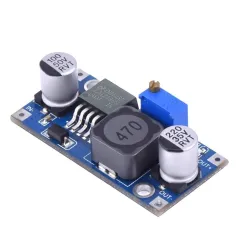
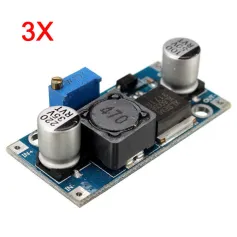
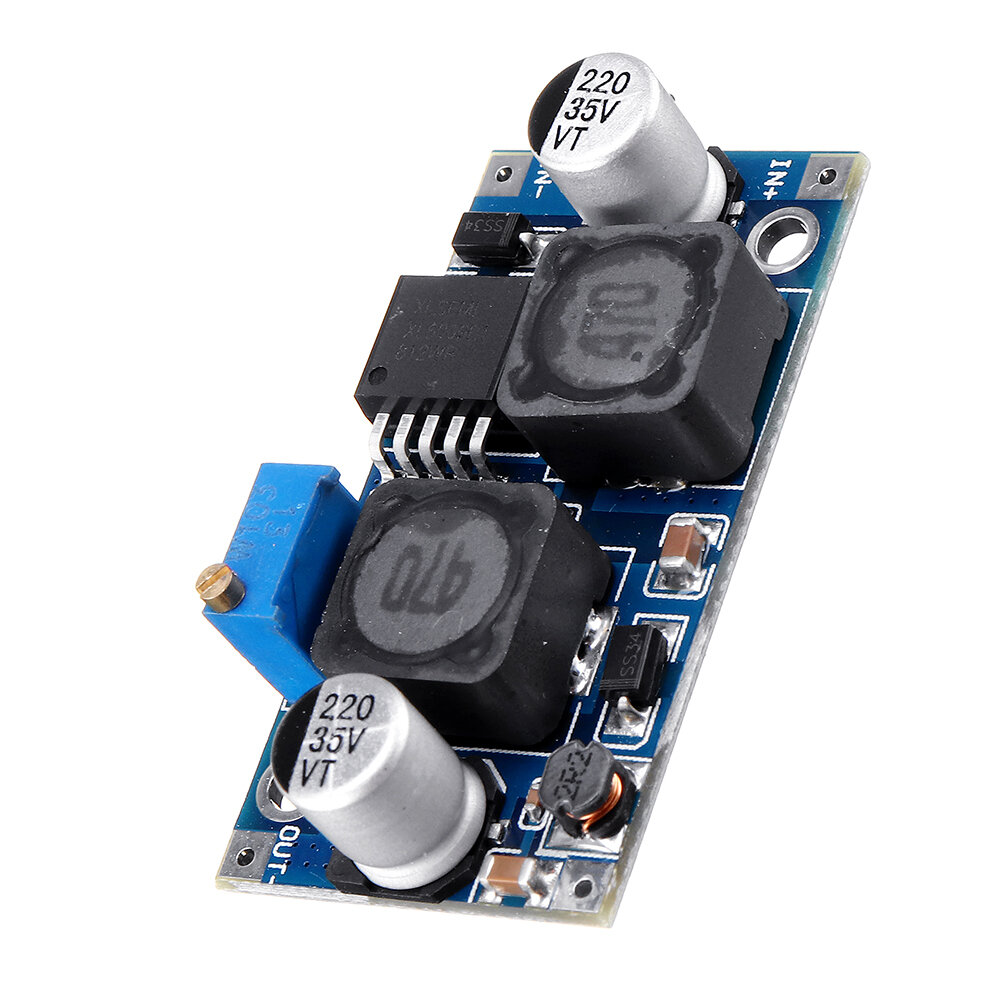
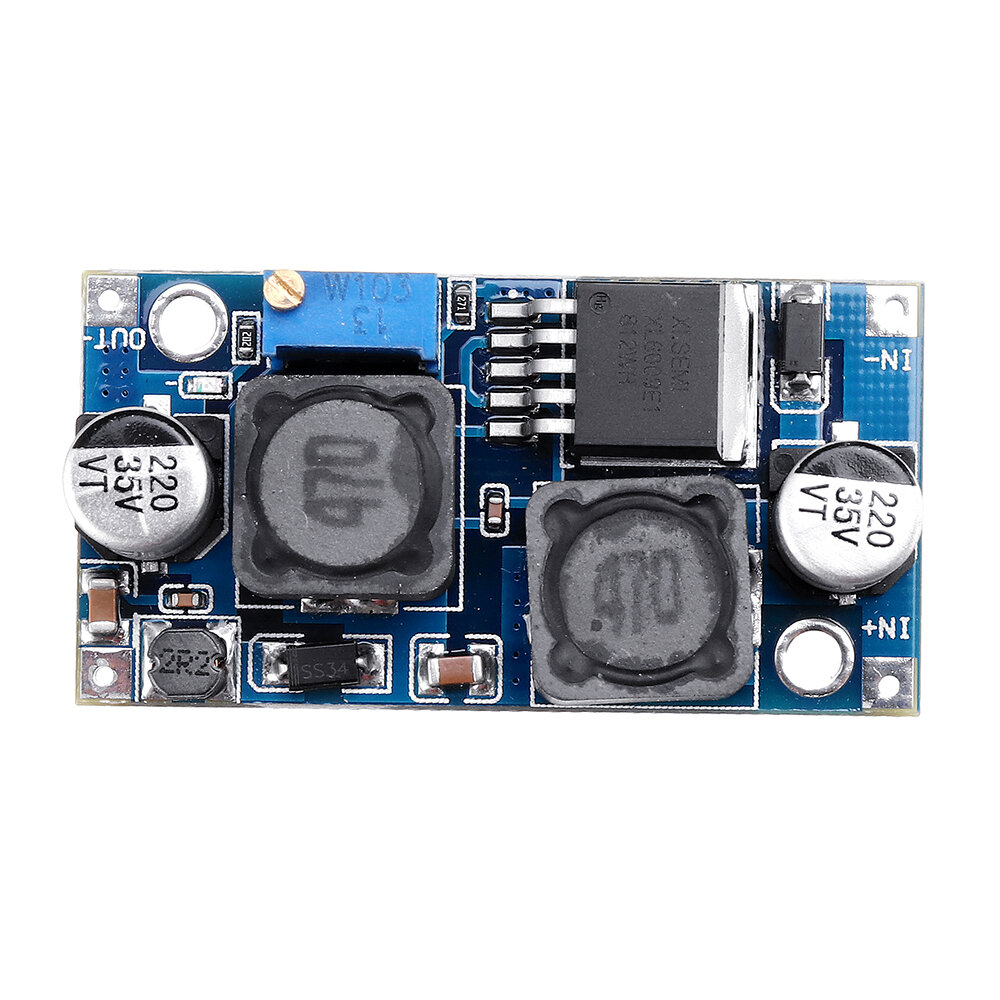
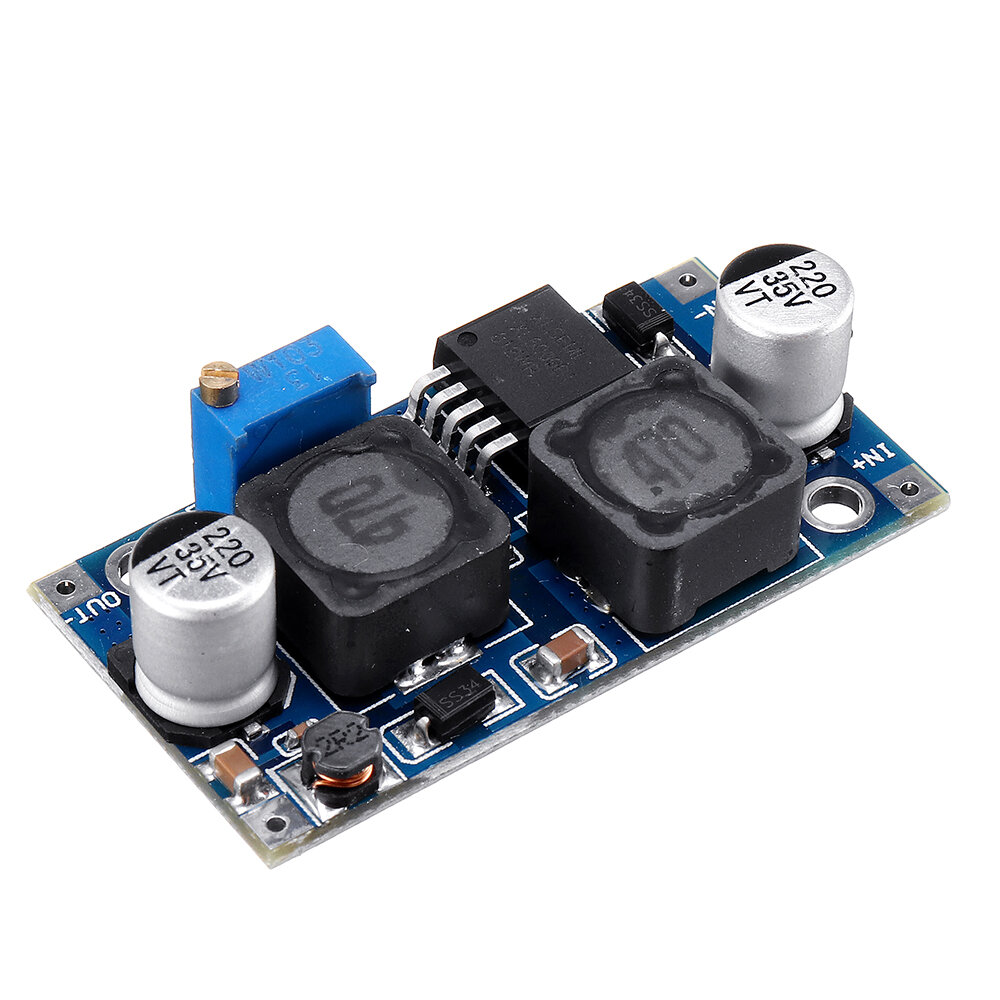
Auto start voltage will be pulled down to 7V or less, and engine will at high speed when the voltage up to 15V or higher. It is hard to work for 12V electrical equipment, this automatic buck boost module can solve this problem, regardless of the input voltage is 5V or 12V or 32V, the output can be stabilized at 12V.
Built-in 4A efficient MOSFET switches enable efficiency up to 94%; (LM2577 current is 3A)
High switching frequency 400KHz, the ripple is smaller, dimension is smaller . (LM2577 frequency only 50KHz)
Applications:
Car regulator, solar photovoltaic, wind power and other applications of voltage instability .
Specifications:
Model Specification: DSN6000AUD Automatic Buck module
Module Properties: Non- isolated boost (BOOST)
Rectification: Non- Synchronous Rectification
Input Range: 3.8V - 32V
Output Range: 1.25V - 35V
Input Current:3A ( max ) , no-load 18mA (5V input , 8V output , no-load is less than 18mA. Higher the voltage, the greater the load current. )
Conversion efficiency:<94% ( the greater the pressure , the lower the efficiency )
Switching frequency:400KHz
Output Ripple:50mV ( the higher the voltage, the greater the current, the greater the ripple )
Load Regulation:± 0.5%
Voltage Regulation:± 0.5%
Operating Temperature:-40 - +85
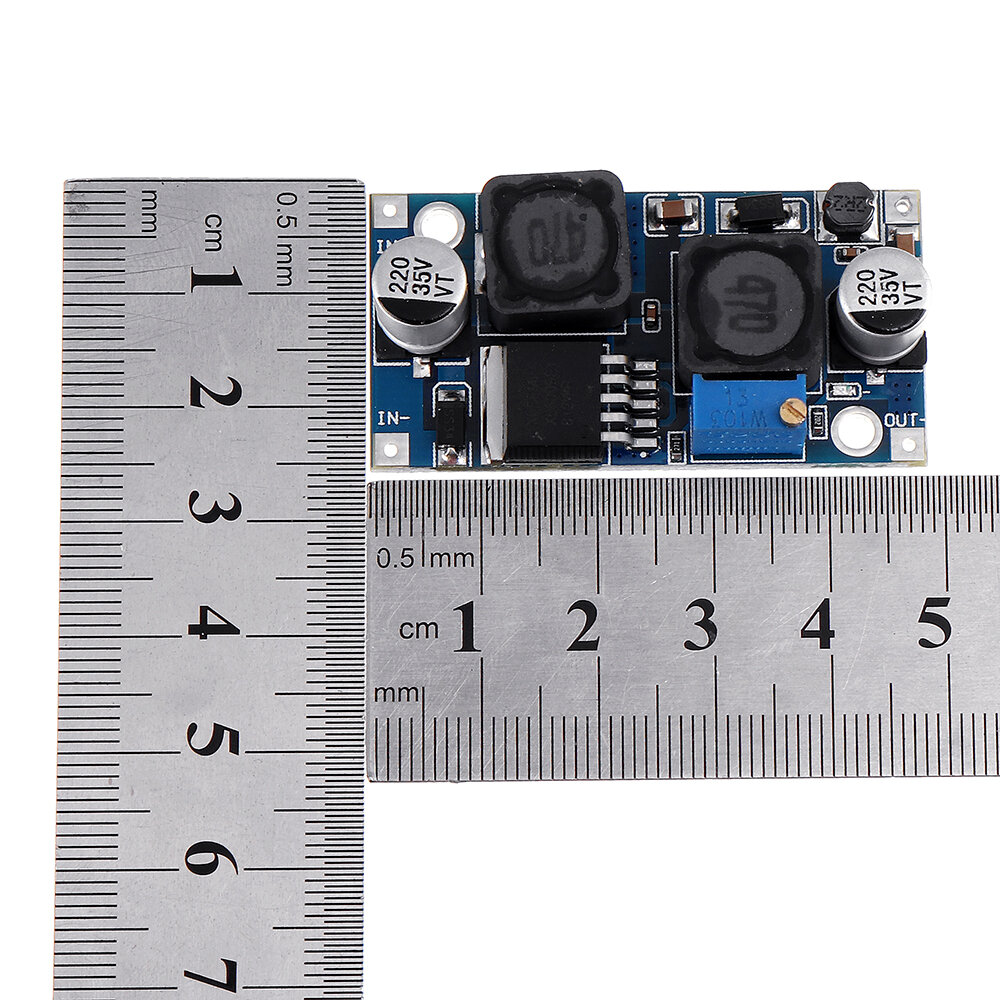
Dimensions:48mm * 25mm * 14mm ( L * W * H )
Package included:
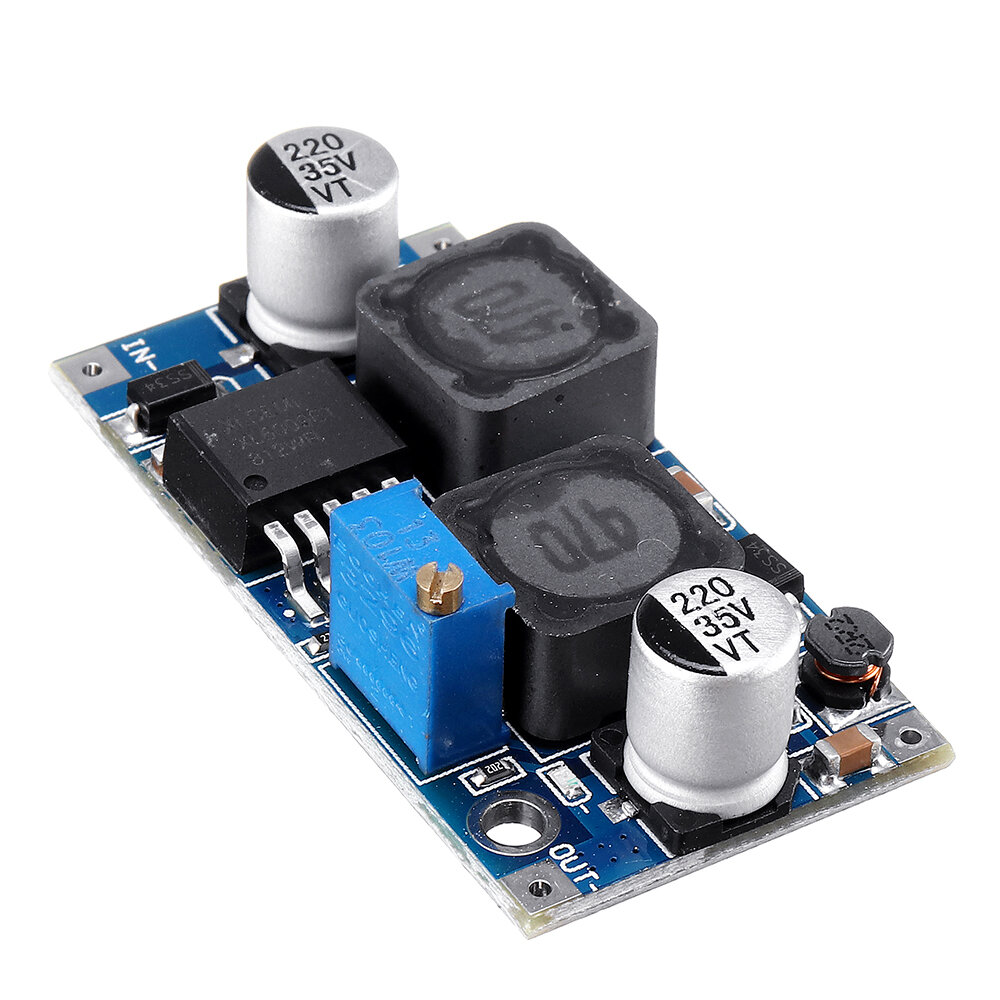
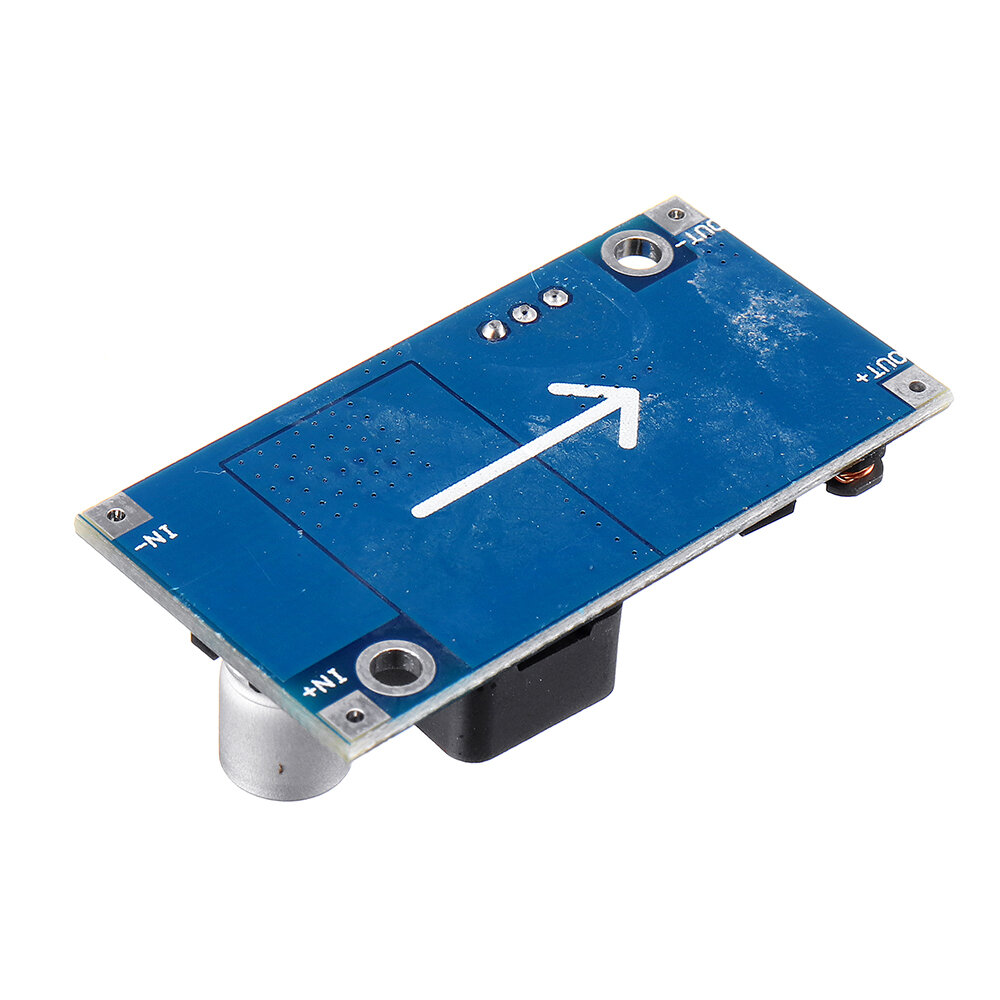
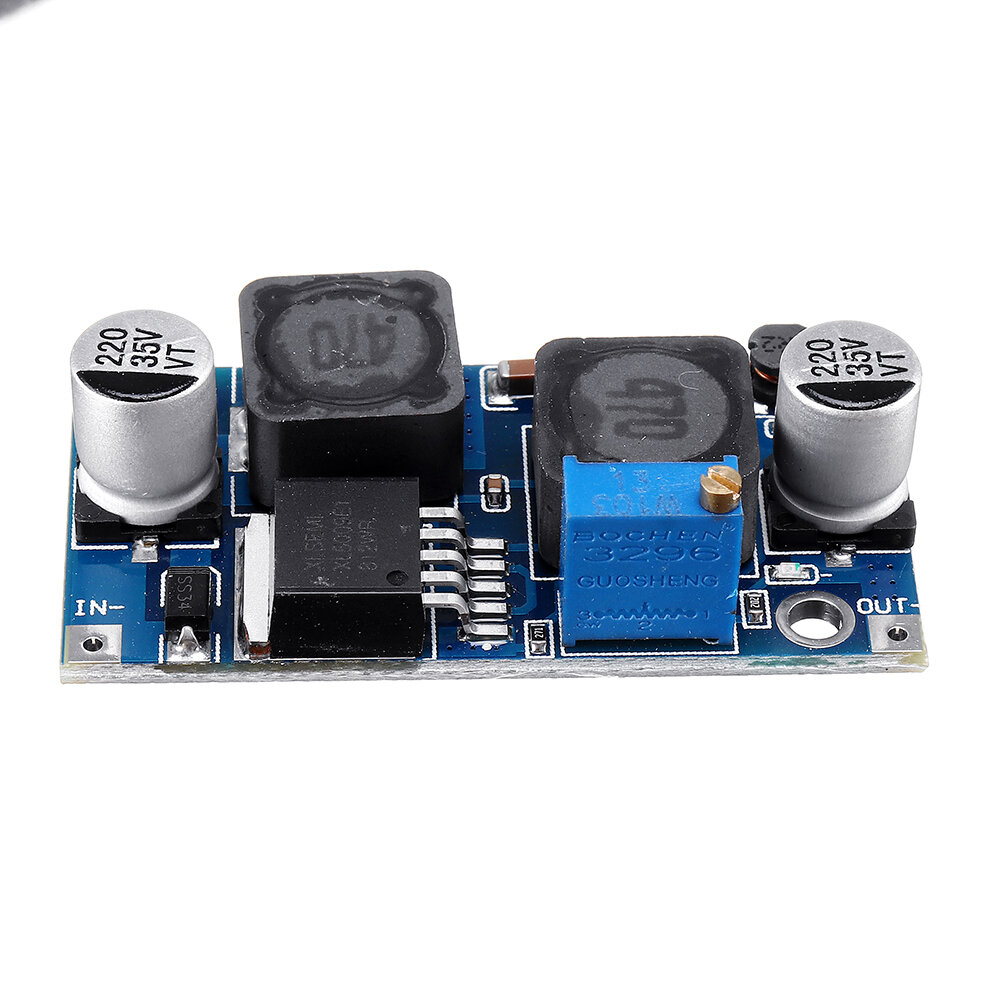
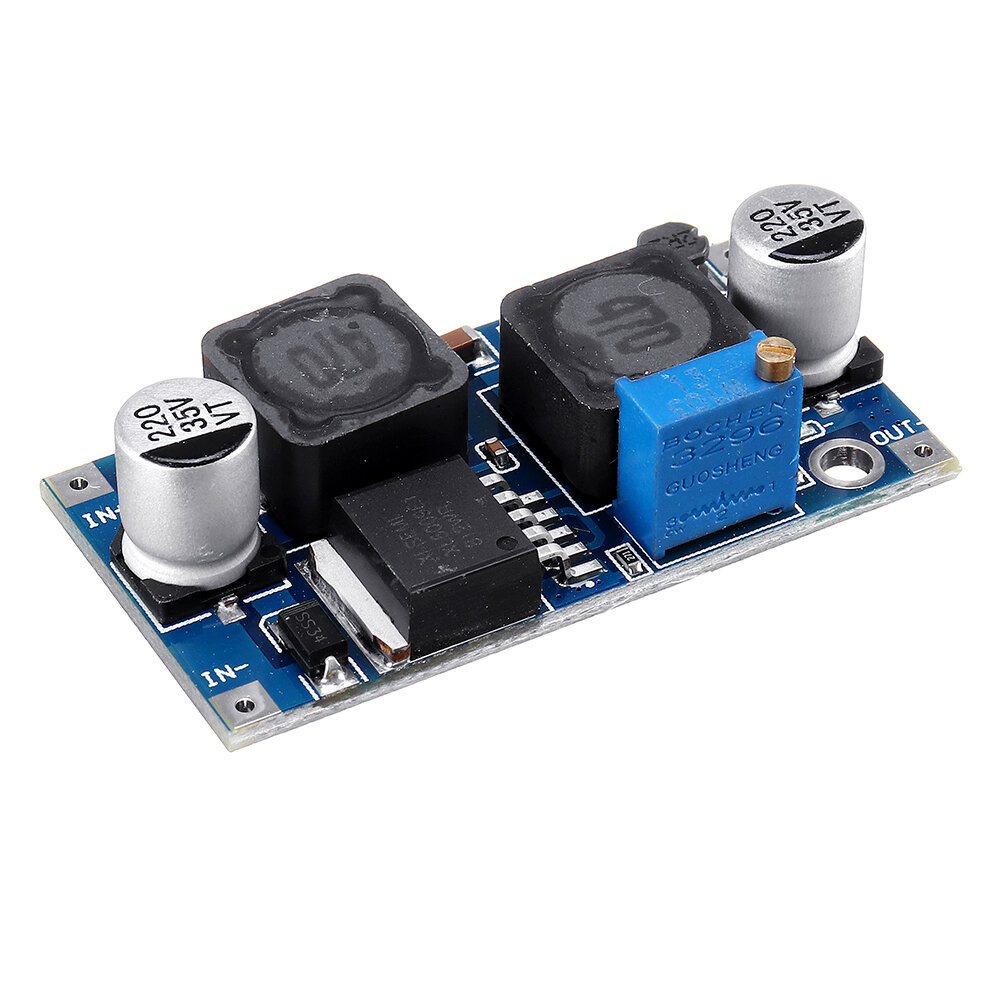
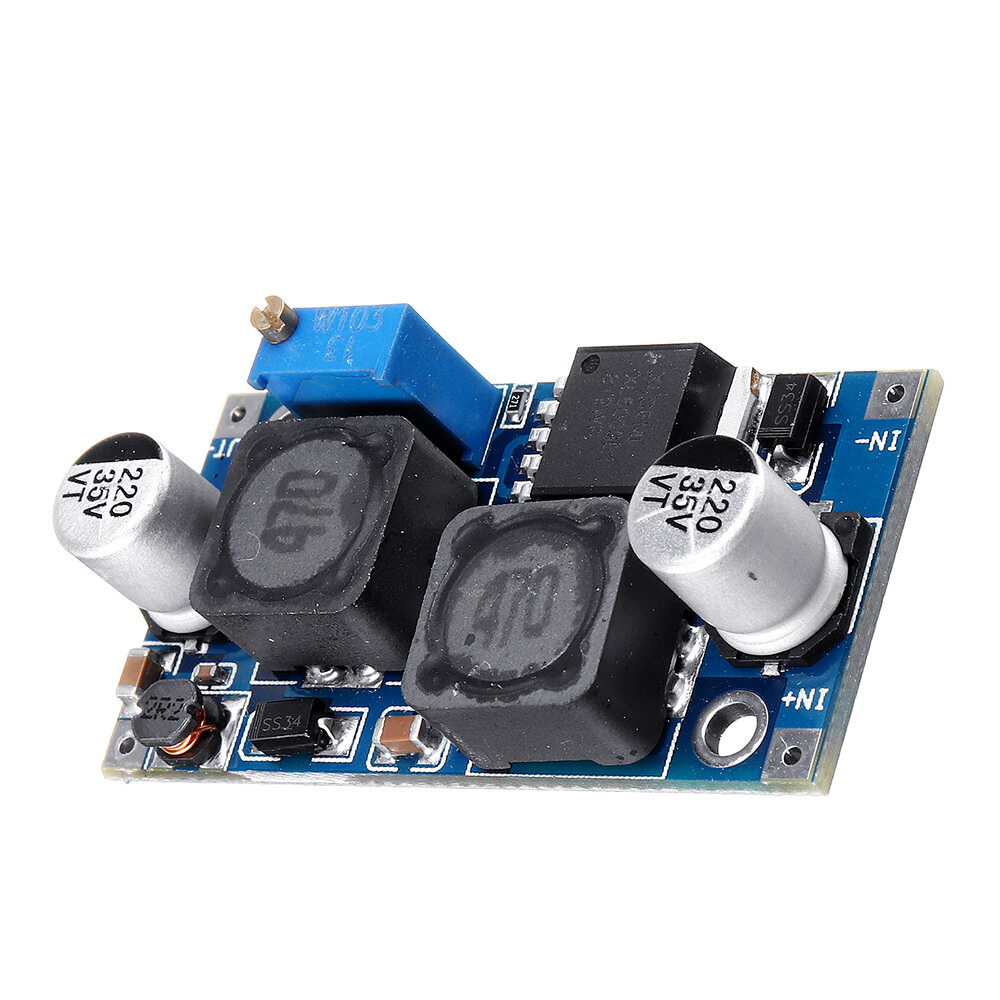
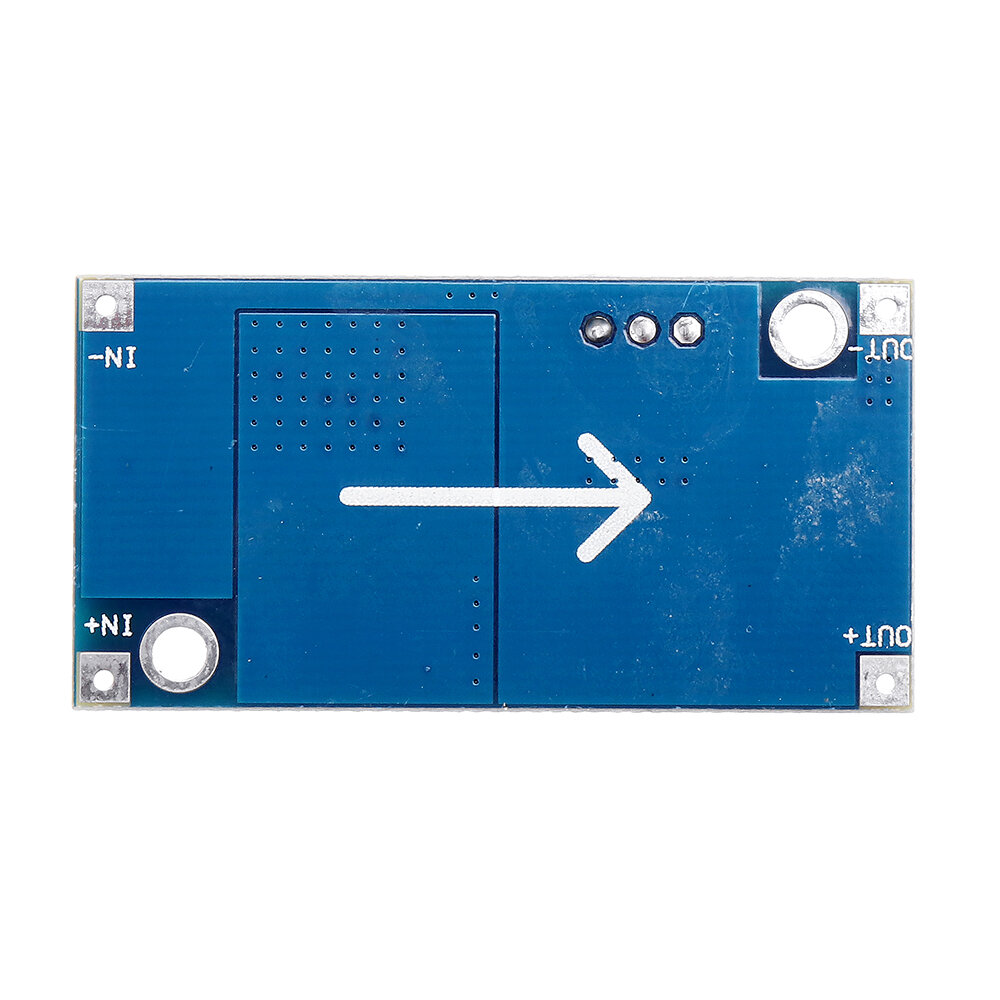
3 x DC-DC Boost Buck Adjustable Step Up Step Down Automatic Converter XL6009 Module
Just a little warning: during my tests, I lowered the input voltage and under 3.5V, the circuit doesn't cut but becomes crazy and the output (that was set to 15V with the pot.) jumps to 40V with no load. With a 2k resistor at the output, it only goes to 30V.
Of course, this is under the specified minimum voltage, but for solar applications, how can you guarantee that the input voltage will not be there?
So when it says "Module Suitable For Solar Panel" I'm suspicious. If you really want to use it like that, you could add a small circuit between the solar panels and the converter to cut it if the voltage drops under the minimum 3.8V or clamp the output with a zener (there's no voltage rating on the output capacitor so that kind of overvoltage could damage it if it is not designed to handle 40V)
Also the problem with that kind of circuit is that if you try to extract too much current from a solar cell, its voltage drops, but then the converter will try to get even more current to keep it's output and the input voltage drops even more... So you also have to add a circuit that limits the output current when the input voltage drops.
Conclusion: good circuit if you use it properly but not really appropriate for solar panels despite what it says in the title.
Works as specified if you stay in the limits.
Just a little warning: during my tests, I lowered the input voltage and under 3.5V, the circuit doesn't cut but becomes crazy and the output (that was set to 15V with the pot.) jumps to 40V with no load. With a 2k resistor at the output, it only goes to 30V.
Of course, this is under the specified minimum voltage, but for solar applications, how can you guarantee that the input voltage will not be there?
So when it says "Module Suitable For Solar Panel" I'm suspicious. If you really want to use it like that, you could add a small circuit between the solar panels and the converter to cut it if the voltage drops under the minimum 3.8V or clamp the output with a zener (there's no voltage rating on the output capacitor so that kind of overvoltage could damage it if it is not designed to handle 40V)
Also the problem with that kind of circuit is that if you try to extract too much current from a solar cell, its voltage drops, but then the converter will try to get even more current to keep it's output and the input voltage drops even more... So you also have to add a circuit that limits the output current when the input voltage drops.
Conclusion: good circuit if you use it properly but not really appropriate for solar panels despite what it says in the title.
Works as specified if you stay in the limits.
Just a little warning: during my tests, I lowered the input voltage and under 3.5V, the circuit doesn't cut but becomes crazy and the output (that was set to 15V with the pot.) jumps to 40V with no load. With a 2k resistor at the output, it only goes to 30V.
Of course, this is under the specified minimum voltage, but for solar applications, how can you guarantee that the input voltage will not be there?
So when it says "Module Suitable For Solar Panel" I'm suspicious. If you really want to use it like that, you could add a small circuit between the solar panels and the converter to cut it if the voltage drops under the minimum 3.8V or clamp the output with a zener (there's no voltage rating on the output capacitor so that kind of overvoltage could damage it if it is not designed to handle 40V)
Also the problem with that kind of circuit is that if you try to extract too much current from a solar cell, its voltage drops, but then the converter will try to get even more current to keep it's output and the input voltage drops even more... So you also have to add a circuit that limits the output current when the input voltage drops.
Conclusion: good circuit if you use it properly but not really appropriate for solar panels despite what it says in the title.
Will bu used in the future with old PC-power-supplies for variable voltages.
I have tested it with a power supply and measured the output voltage. The input was 7.2 Volts. I have used output at voltages of more than 25 V down to 1.5 Volts.
The trimmer for the output voltage is extremely sensitive (10 turn potentiometer) so that the exact voltage can be set easily.
The input voltage should be 5 Volt or higher for stable output.
Will bu used in the future with old PC-power-supplies for variable voltages.
I have tested it with a power supply and measured the output voltage. The input was 7.2 Volts. I have used output at voltages of more than 25 V down to 1.5 Volts.
The trimmer for the output voltage is extremely sensitive (10 turn potentiometer) so that the exact voltage can be set easily.
The input voltage should be 5 Volt or higher for stable output.
Will bu used in the future with old PC-power-supplies for variable voltages.
I have tested it with a power supply and measured the output voltage. The input was 7.2 Volts. I have used output at voltages of more than 25 V down to 1.5 Volts.
The trimmer for the output voltage is extremely sensitive (10 turn potentiometer) so that the exact voltage can be set easily.
The input voltage should be 5 Volt or higher for stable output.
Tips:For questions about your order, place of delivery, product discount, taxation, delivery time, warranty, shipping, payment, exchange rate, and other questions unrelated to the product, please contact customer service.
showing 1-7 of 7|
Show Original
A part of the QA has been auto-translated.
0
Q:
I used AA batteries of 11 volt. I connected two of these modules with the battery one is adjusted to 5v and another is adjusted to 12 v. If drain voltage from any one it works good,when i use both the voltage suddenly went high and damaged my electrical circuits. why?
And how did you set it, in paralel? You used to connect two circuits from one powersource, but the otputs are not isolated, so one pole is always connected from input to output, so you simply cant connect two outputs together.
Answered by brocak on 15/11/2020Helpful (0)
0
Q:
Does this module provide constant current for driving high power LEDs?
I never measured it with an oscilloscope or anything like that but I've used these for basic led strip lights drawing 3A at 5v bucked from 12v and I also boosted 5v to 12v at 2A. There was no voltage dips at that point (there is an alright smoothing capacitor on the output). I wouldn't push the much farther than that to power high drain LEDs because they got very hot how I used them. Youd want a heatsink on the regulator or maybe even a fan. At that point your better off just using a more well suited power supply I reckon.
Answered by will on 15/11/2020Helpful (0)
0
Q:
Ibought them in Nov 2019 and noticed A HUGE PROBLEM already mentioned by one buye. When the input voltage drops below 3.7V ITHE DEVICE GENERATES A HUGE VOLTAGE SPIKE of more than 50 V !!! This will likely DESTROY your equipment !
I've had the same problem! I disclamed about this phenonem to the manufacuror via BG about 2 years ago. THIS is 'Unforgivable' construction.FAULT. It seems that they haven't changed the constuction since then. SHAME ON YOU MANUFACTUROR (and a bit of shame on BG too, for NOT to correct this thing by informing the manuf.) THIS PHENOMEN WILL ABSOLUTELY DESTROY YOUR ELECTRONICS. Where does the liabelity lie? At BG or at the 'Manufacturor? A 'strange phenomen' accures with this unit: when you utterly decrase the 'Input' voltage to say < ~2,7V the unit 'suddenly' shuts of to 0V as it is supposed to do Hmm.... so there's a 'KILLER-ZONE' between ~3,3V down to; ~2,7V OMG.
Answered by KIRASE on 16/11/2020Helpful (0)
0
Q:
I want to take a 24 volt and reduce it to 20 volts will this work for me
Corrente de entrada: 3A (máx), sem carga 18mA (entrada de 5V, saída de 8V, sem carga é inferior a 18mA. Quanto maior a tensão, maior a corrente de carga.)